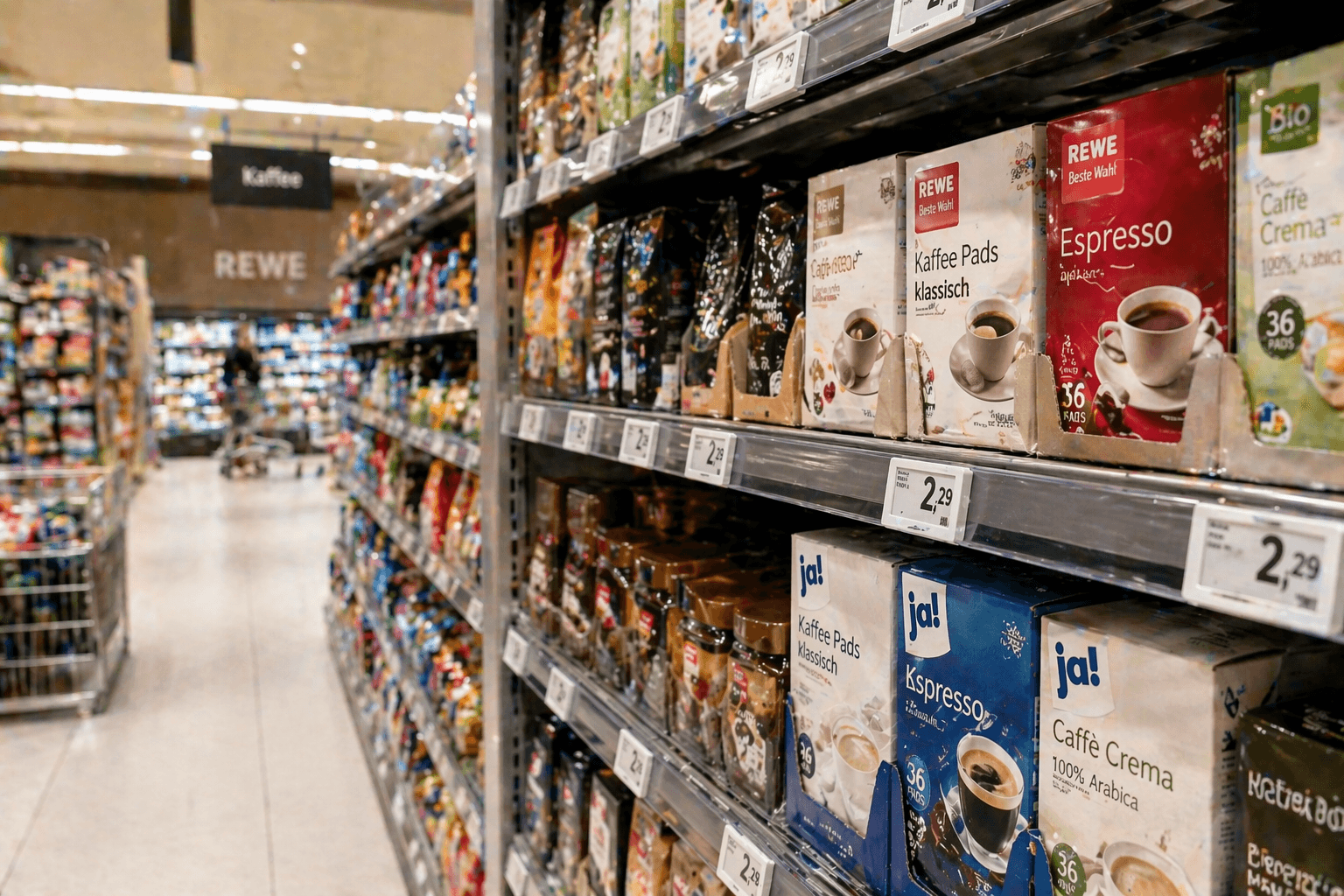
From share of voice to share of shelf — why behavioral intelligence resolves the brand-versus-performance debate
84% of CMOs now cite marketing ROI as their primary budget metric. CEO and CFO belief in long-term brand building dropped 11 percentage points in a single year. The brand-versus-performance debate has persisted for decades not because marketers lack conviction but because no measurement system has been able to show both camps what their investment actually produced at the shelf. Behavioral intelligence changes that.
84% of CMOs now cite marketing ROI as their primary budget metric. CEO and CFO belief in long-term brand building dropped 11 percentage points in a single year. More buyers are shifting to performance than brand — and they all know it is the wrong answer, but cannot defend the right one in the room where the budget gets signed. The brand-versus-performance debate has persisted for decades not because marketers lack conviction but because no measurement system has been able to show both camps what their investment actually produced at the shelf. Behavioral intelligence changes that. When sell-through is the shared outcome, brand and performance stop being competing philosophies and become sequential stages in the same commercial chain.
Brand and performance have been arguing about inputs. The shelf outcome that would arbitrate between them has been invisible to both. Behavioral intelligence makes it visible.
The debate nobody is winning
In November 2025, NielsenIQ's 2026 CMO Outlook documented a number that should concern any brand-side marketer: the share of CMOs who say their CEO and CFO believe in the long-term value of brand building dropped from 80% to 69% in a single year — an 11-percentage-point fall that represents the sharpest decline in C-suite brand confidence that NIQ has recorded. In the same study, 84% of CMOs cite marketing ROI as their primary metric for budget allocation, and 74% face increased scrutiny to prove that marketing investment is producing commercial returns.
The behavioral response to this pressure is predictable and well-documented. Only 55% of CMOs are now allocating 60% or more of their budget to long-term brand building, down from 59% the year before. IAB's 2025 data confirms the directional shift: more buyers are increasing performance ads than brand ads, and among those shifting toward performance, pressure to prove ROI is the single top driver.
Here is what makes this data particularly striking: the same CMOs who are shifting toward performance know they are making a partial mistake. In the EMARKETER and StackAdapt survey of B2B marketers, 45.5% said they would allocate more than half their budget to brand if budgets were not a constraint. The constraint is not conviction. It is measurement. Marketers believe brand investment works. They cannot prove it in the language that finance uses to make budget decisions. So the budget moves toward the channel that can show a number — even when that number answers the wrong question.
This is the brand-versus-performance debate in its current form: not a disagreement about what works, but a measurement failure that systematically disadvantages the investment that is harder to attribute and favors the investment that produces legible, immediate, platform-reported signals — regardless of whether those signals represent commercial causation or digital correlation.
What the evidence actually says — and why it has not resolved the debate
The performance of brand investment as a commercial driver is not actually in dispute among people who have looked at the evidence carefully.
Analytic Partners' ROI Genome — drawn from one of the largest marketing effectiveness benchmark datasets in existence — documents a finding that should end the brand-versus-performance debate on its own terms: in their research, a 72% increase in brand spend year-on-year led to a 76% increase in profit, and the halo effect extended to performance media, with a 35% boost in performance spend yielding a 48% increase in return. In reverse, a client that shifted 61% of brand's share of the marketing budget to performance saw a 22% decrease in performance ROI and a 16% decrease in total marketing ROI. Brand investment makes performance investment work better. Cutting brand investment reduces the efficiency of the performance investment that remains.
Nielsen's 2024 cross-channel effectiveness research found that brands with high consumer awareness achieve 2.5 times the conversion rates of low-awareness competitors — across search, social, display, and video. WARC's 2025 effectiveness database shows brands with strong equity metrics achieve 40 to 60% higher customer lifetime value compared to category averages. McKinsey's research on US digital campaigns found that moving from low brand awareness to moderate brand awareness reduced cost per acquisition by an average of 35%.
Nielsen's own synthesis of the long-run evidence is unambiguous: brand building accounts for approximately 60% of long-term sales impact. Les Binet and Peter Field's IPA effectiveness research established the 60:40 brand-to-performance split as the empirical baseline for sustainable marketing investment more than a decade ago. A 2024 study of UK advertisers using retail media found that campaigns optimized for both brand metrics and sales outcomes outperformed single-objective campaigns by 45% on blended effectiveness scores.
This body of evidence is not obscure. It is well-known, well-cited, and presented regularly at every major marketing conference. It has not resolved the internal budget debate at most FMCG and consumer brands because it speaks in marketing language rather than finance language. Aggregate econometric findings about brand investment yield across thousands of brands are not the same as proof that this brand's investment in this market produced this commercial outcome. The CFO asking whether the brand campaign drove sell-through at Indomaret last quarter is not asking for an aggregate effectiveness benchmark. They are asking for a market-specific, product-specific, time-specific answer — and that answer has never been available from any standard measurement infrastructure.
The debate persists not because the evidence is weak. It is because the evidence arrives at the wrong granularity to be actionable in a budget conversation.
Why the debate is unresolvable without sell-through data
The structural reason the brand-versus-performance debate cannot be resolved from within each camp's own measurement infrastructure is straightforward: each camp measures inputs, not the shared output.
Performance marketing measures digital signals: clicks, impressions, attributed conversions, platform-reported ROAS. These are real signals with real information content. They tell the brand what happened in the digital channel. They do not tell the brand what happened at the physical shelf where the majority of FMCG commercial outcomes are determined.
Brand marketing measures awareness proxies: recall, consideration scores, share of voice, brand equity indices. These are also real signals with real information content. They tell the brand that mental availability has changed. They do not tell the brand whether that change in mental availability translated to shelf preference — in which markets, at which retailers, for which SKUs, relative to private label and competitive alternatives.
Both measurement systems are measuring something real. Neither is measuring the commercial outcome that the CFO is asking about. When the CMO and the CFO sit down with budget allocation on the table, the performance team can show a ROAS number from the digital dashboard, the brand team can show an awareness score from a survey, and neither number answers the question: what did this campaign investment produce in actual sell-through?
The shelf outcome is the shared measurement standard that both camps have been arguing about without being able to see. It is what both brand and performance investment are ultimately trying to produce. And until recently, there was no measurement infrastructure that could connect either type of campaign investment causally to that outcome at the resolution required for budget decisions.
What changes when sell-through becomes the common metric
Behavioral intelligence changes the structure of the brand-versus-performance argument by introducing the commercial outcome — sell-through at retail, measured at the regional and SKU level — as the shared evaluation standard for both types of investment.
When a brand campaign runs in specific geographic markets and a causal inference analysis connects regional sell-through data to the geographic pattern of campaign exposure, the question "did brand investment produce commercial outcomes?" becomes empirical rather than philosophical. The brand campaign either produced measurable sell-through uplift in the regions where it ran — relative to matched control markets where it did not run — or it did not. The same analysis applies to a performance campaign, a creator content program, a retail media buy, or any combination of investment across the full campaign portfolio.
Three things become visible that were previously invisible.
The sequential contribution of brand to performance efficiency. The reason the brand-versus-performance debate is structured as a competition is that each camp claims credit for commercial outcomes without the measurement infrastructure to show where credit actually belongs. When sell-through is the shared outcome, the sequential relationship becomes observable: markets with sustained brand investment produce the awareness baseline that makes performance investment more efficient. The 2.5x conversion rate advantage of high-awareness brands that Nielsen documents shows up not as a survey finding but as a difference in sell-through uplift per unit of performance spend between high-brand-investment markets and lower-brand-investment markets.
Where in the geographic footprint each investment type produces the most commercial return. A national brand campaign that runs uniformly across a market produces regionally varied sell-through outcomes because the brand's distribution, competitive environment, retailer mix, and consumer loyalty profile vary by region. Behavioral intelligence at market-level granularity identifies which regions the brand campaign is working hardest and which regions it is underperforming — allowing the next campaign investment to be concentrated where the commercial return is highest rather than distributed uniformly on the assumption that national coverage equals national impact.
The moment where brand investment has done sufficient preparation work for performance to convert efficiently. The IPA/Binet and Field 60:40 guideline is a population-level recommendation derived from aggregate effectiveness data. Behavioral intelligence provides the brand-specific, market-specific version of that analysis: in this market, at this point in the brand's equity trajectory, does the current brand investment level produce measurable commercial return, or has the brand built sufficient mental availability that the next marginal investment should shift toward performance capture rather than awareness creation? This is the question that the aggregate benchmark cannot answer and that sell-through-connected behavioral analysis can.
The synthesis the industry has been waiting for
The resolution of the brand-versus-performance debate that behavioral intelligence makes available is not a victory for one camp over the other. It is a reframing that makes the competition itself obsolete.
Brand and performance investment are not competing budget categories in the same way that a company's product development and sales budgets are not competing budget categories. They are sequential inputs to the same commercial outcome. Brand investment creates the mental availability and preference that makes a consumer's shelf decision move toward the brand rather than toward the private label alternative. Performance investment captures the demand that brand investment has primed, at the moment when the consumer is closest to purchase. Cutting brand investment does not make performance investment more efficient — as Analytic Partners' data documents, it makes it less efficient. Cutting performance investment does not validate brand investment — it removes the mechanism through which brand-primed demand converts to commercial outcome.
The measurement infrastructure that has been available to most brands forces a competition between these two stages because neither can demonstrate its contribution to the shared outcome. When sell-through data is available, connected to campaign signal patterns through causal inference, and readable at the regional and SKU level — the competition becomes a collaboration. Brand investment is evaluated by how effectively it produces the awareness baseline that makes performance convert efficiently. Performance investment is evaluated by how effectively it captures the demand that brand has primed at the shelf. Both are evaluated against the same commercial truth.
This is the synthesis the industry has been arguing toward for a decade without the measurement infrastructure to reach it. NIQ's 2026 CMO Outlook documents the urgency: C-suite belief in brand building is declining, ROI scrutiny is intensifying, and 54% of CMOs now struggle to thread together data from different sources — a figure that nearly doubled from 31% the prior year. The data fragmentation problem that makes the brand-versus-performance debate unresolvable in most organizations is the problem that behavioral intelligence is structurally built to address.
The CMO who can show the CFO not just that brand investment is theoretically important — but that brand campaign exposure in specific markets produced measurable sell-through uplift relative to matched control markets, at the SKU and retailer level, and that this uplift compounded the efficiency of the performance investment running in the same period — has resolved the debate with evidence rather than argument.
That conversation is now possible. The measurement infrastructure that makes it so is what behavioral intelligence provides.
Sources and references
- NielsenIQ. 2026 CMO Outlook. 84% of CMOs cite marketing ROI as primary metric; only 69% say CEO and CFO believe in long-term brand building, down 11pp from 2024; 74% face increased scrutiny; only 55% allocate 60%+ to long-term brand building, down 4pp. Via Marketing Dive, November 2025.
- NielsenIQ. 2026 CMO Outlook. 54% of CMOs struggle to thread together data from different sources, nearly double the 31% who reported the same the prior year.
- EMARKETER / StackAdapt. 2025 Brand Marketing Survey. Proving ROI is the single biggest barrier to brand investment. 45.5% of B2B marketers would allocate more than half their budget to brand if unconstrained. 40% plan to increase brand-building budgets.
- Analytic Partners. ROI Genome. 72% increase in brand spend led to 76% increase in profit; 35% performance spend boost yielded 48% increase in return when paired with brand investment. Shift of 61% of brand budget to performance produced 22% decrease in performance ROI and 16% decrease in total marketing ROI.
- Nielsen. Brand building accounts for approximately 60% of long-term sales impact. Performance Marketing vs Brand Marketing in 2025, Digital Silk / Yahoo Finance, September 2025.
- Nielsen. 2024 Cross-Channel Effectiveness Study. Brands with high consumer awareness achieve 2.5x conversion rates of low-awareness competitors across search, social, display, and video.
- WARC. 2025 Effectiveness Database. Brands with high equity metrics achieve 40-60% higher customer LTV compared to category averages.
- McKinsey. Moving from low brand awareness (under 20%) to moderate awareness (40-60%) reduced cost per acquisition by an average of 35% across US digital campaigns. Via Porter Wills, December 2025.
- IPA / Binet and Field. 60:40 brand-to-performance split as empirical baseline for sustainable marketing investment.
- IAB. 2025 Outlook Study. More buyers increasing performance ads than brand ads; pressure to prove ROI cited as top driver of shift to performance.
- Porter Wills. Brand vs Performance Marketing: Why You Need Both (2026 Data). UK retail media study 2024: campaigns optimized for both brand metrics and sales outcomes outperformed single-objective campaigns by 45% on blended effectiveness scores.
- eMarketer. US advertisers spent more than $190 billion on digital performance channels in 2024.
Veinera connects campaign signals to sell-through outcomes using causal inference methods — giving brand and performance teams the shared commercial evidence that resolves the budget debate with data rather than argument. Book a 30-minute walkthrough, no commitment.
Related reading
- The four layers of campaign performance — and why most brands only measure two of them · Apr 5, 2026
- Retail media promised closed-loop measurement. Here is what it actually delivered. · May 31, 2026
- The private label squeeze — why behavioral intelligence is the most important defense FMCG brands have right now · Jun 14, 2026